
As the water finally receded and streaks of mud still clung to the walls, we revisited the home of Thuy’s family – one of thousands severely affected by Typhoon Matmo in Lang Son. Their small house sits quietly beside a road busy with passing vehicles. The lingering smell of dampness mixed with fresh mud serves as a stark reminder of a disaster that has yet to fade from memory.
Thuy’s husband works far from home. She stays behind, doing odd jobs in the neighbourhood while caring for her two young sons – one aged three, the other six. Her voice slows as she recalls the night when the water rose:
“During the storm, our whole house was submerged. The three of only had time to run to a neighbour’s house to take shelter and stay safe. We couldn’t save the livestock, poultry or anything inside the house. My husband was away; the electricity was out, the signal was gone, so he couldn’t call… he was very worried but there was nothing he could do,” Thuy said.
Standing in what used to be their livestock shed, now completely empty, the aftermath feels even heavier. Within the swirling muddy water, hopes of a warm and plentiful Lunar New Year were swept away. The ten chickens she had saved up for the biggest traditional celebration of the year – a rare moment for the family to gather – were all lost. The pigs, their main source of income, were also gone. Months of effort and future plans vanished overnight.
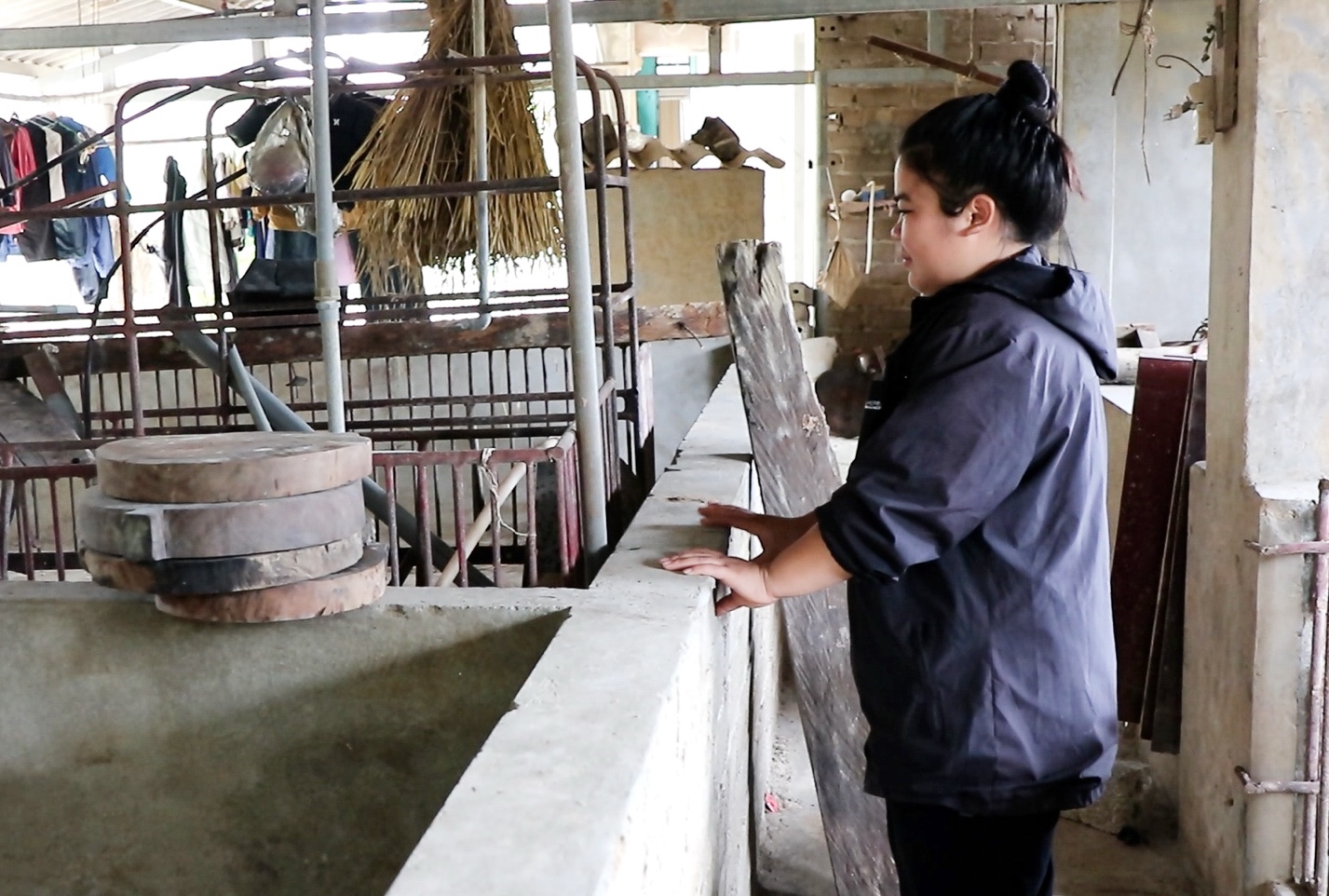
Thuy stands in front of the livestock shed, now completely empty.
“Our livelihood depended mainly on raising pigs. Now that everything has been lost, the damage is huge, and we don’t have the capital to start again… I really don’t know where to begin,” she said, her eyes fixed on the empty shed behind the house – the place where their livestock once stood before being carried away by the flood.
In the days following the disaster, the family survived on rice provided by the Government. But as she swept mud from the floor and tended to her children, pressing questions filled her mind: What will the next planting season look like? What future awaits the children?
When the floodwaters swept in, her children’s books were washed away. They had to stop going to school for a time, falling behind their classmates. “I only want my children to go to school and play like all other children in places untouched by storms,” she said. The state later provided new books, and the community donated clothing. But for her, what matters most is having a stable livelihood so her children can remain in school for the long term.
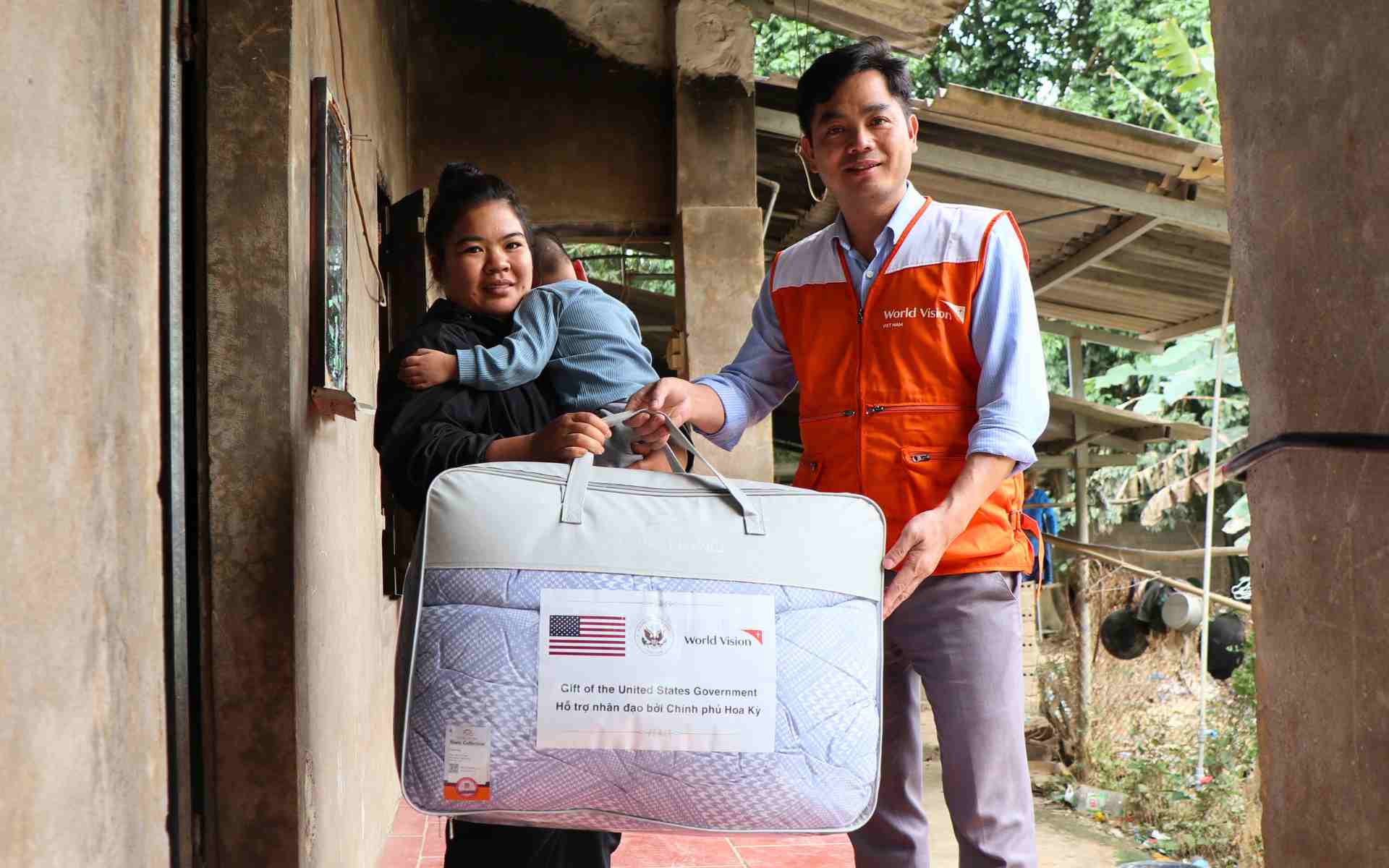
In December 2025, Thuy’s family received an emergency relief kit funded by the United States Government and delivered in partnership with World Vision International in Viet Nam (WVIV). The household kit included essential items: warm blankets, stainless-steel pots, bowls and chopsticks, candles, hygiene supplies, sanitary pads for women and other basic necessities.
These simple items carried great meaning during her most difficult period. “The blanket helped get through this winter. The kit also had sanitary pads – something women need every month. In times like these, those items are truly precious,” she said.
The support was not only material. It was a gesture of solidarity during a time of deep loss. “The emergency assistance from the United States Government made feel cared for and eased some of the sorrow caused by the floods,” she shared.
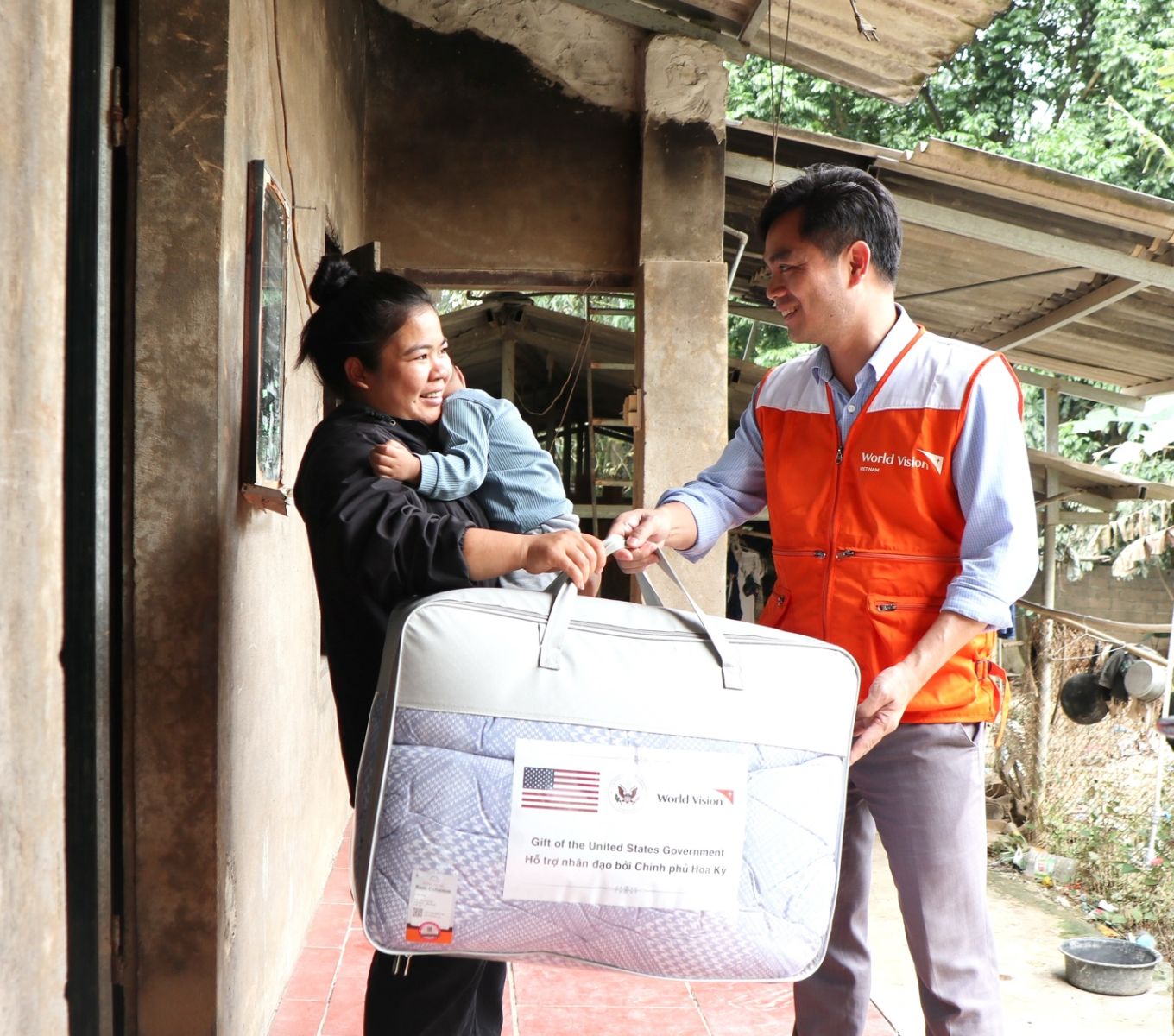
A staff member of World Vision International in Viet Nam delivers humanitarian assistance funded by the United States Government to Thuy’s family
The United States Government-funded emergency response project, with a total budget of nearly 13 billion VND (500,000 USD), has supported more than 3,000 disaster‑affected households. Activities include providing 1,000‑litre water tanks for 480 households to improve access to clean water; distributing essential household kits and hygiene kits to 2,000 households; supplying drinking water to 630 households; and offering cash assistance to 330 households to help improve access to clean water and sanitation – vital factors in preventing disease after floods.
Amid heavy losses of crops, livestock and livelihoods, Thuy’s greatest hope now is to receive support for seeds and animals to rebuild. “Just a little initial capital, and we will try our best to start again,” she said with quiet determination.
After every natural disaster, what remains is not only mud, debris and empty homes, but also questions about tomorrow. Yet from warm blankets, new cooking pots, or schoolbooks placed into the hands of children, hope is being slowly rekindled.
With the joint efforts of governments, donors and the international community, families like Thuy’s are not only receiving immediate relief, but also a chance to rebuild their lives, restore livelihoods and revive dreams for their children.
After every storm, it is not only broken roofs that must be rebuilt – but the quiet, stubborn hope that tomorrow can start anew.